Certified Specialists
in Orthodontics
3 Locations to Serve You —
Kildonan/Transcona, Southdale, & Selkirk, MB!
Request a Consultation Free Consults No referral needed

Our Blog

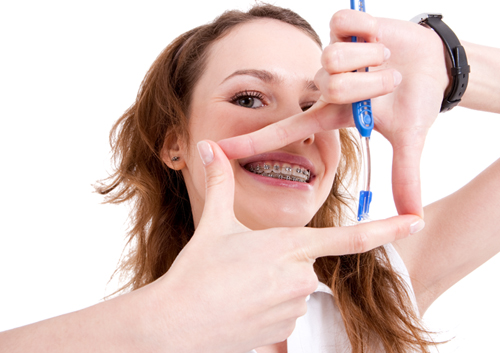
Ugh, Not Braces!

November 20th, 2014

Getting your child excited about braces is a lot like: A) convincing a grumpy toddler that it’s time to take a nap? B) convincing a teenager to stop texting during dinner? C) convincing your husband to eat his peas? The answer, obviously, is all of the above.

And that’s why you may need a few thoughtful ways to get your child on board with braces.

  1. Throw a pre-braces party. It can’t be just any party, however, but a Willy Wonka celebration of candy, chips, gum, and all the sticky and sweet foods your child won’t be able to indulge in during the time he or she is wearing braces. Promise a post-braces celebration, too, and watch as your child’s eyes widen at the thought of an all-you-can-eat junk food buffet.
  2. Encouraging phrases like “braces aren’t eternal, but your straight smile will be” can go a long way.
  3. If your daughter is worried about getting picked on because of braces, then name-drop some A-list celebrities who have worn them. The list includes Cameron Diaz, Kelly Clarkson, Dakota Fanning, and Gwen Stefani.
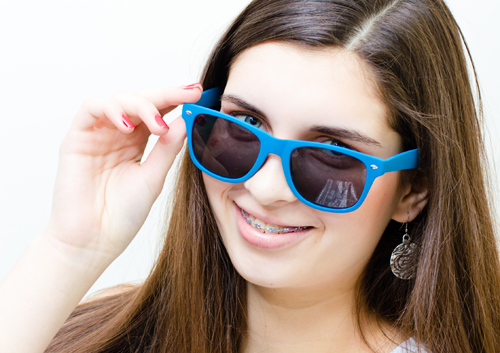
  4. Emphasize that braces today aren’t the same as they were in the Stone Age. From clear ceramic braces to different-colored braces, more options are available. Braces can be cool accessories to express a personal style.
  5. To get your child to embrace braces, you need to sing the praises of beautiful teeth, even if that means pointing out how crooked your teeth are because you never got braces.

The Invisalign® Treatment Process

November 13th, 2014

Invisalign is gaining traction as a sought-after solution for orthodontic problems. Unlike traditional braces, which require the placement of brackets on teeth and the connection of unsightly wires, Invisalign works nearly invisibly (as its name suggests). Particularly for those who do not wish to draw attention to their orthodontic work, Invisalign provides an attractive solution.

Consultation with a Treatment Provider

Our practice has received specialized training to work with Invisalign. During your consultation appointment, Dr. Brent Nickolaychuk will assess your smile needs. In some cases, the type of problem may not lend itself to correction through Invisalign, and we may offer an alternative solution.

Creation of a Custom Treatment Plan

Invisalign works using a series of customized clear trays that fit almost perfectly over the teeth. To create these trays, Dr. Brent Nickolaychuk will take X-rays and impressions of your teeth. These are submitted to a specialized laboratory that makes a 3D image of your smile. This is used to create a specialized treatment plan that provides an estimate of how long treatment will take.

Arrival of Custom Trays

Once your customized trays have arrived, the treatment begins. For Invisalign to work properly, you must wear the aligners 20 to 22 hours per day, removing them only to eat, drink, and brush your teeth. The trays gently draw your teeth into proper alignment, correcting your orthodontic problems as you go about your everyday life.

In general, you will replace your aligners with a new set every two weeks. This is to encourage your teeth to continue moving throughout the treatment process. You’ll need to check in with our Winnipeg or Selkirk, MB office every six weeks or so to ensure treatment progresses smoothly.

Beautiful Smile: Complete!

Once you complete your individualized treatment plan, you’ll have the smile you’ve always dreamed of. Like with traditional braces, Dr. Brent Nickolaychuk may recommend that you wear a retainer to ensure that your teeth remain in their new positions.

What's in my mouth? A Rundown of Orthodontic Appliances

November 6th, 2014

Dr. Brent Nickolaychuk and our team correct the alignment of your teeth and jaws so that you can speak clearly, chew food effectively, and look attractive when you smile. We do this by putting sophisticated gadgets in your mouth. While many of these dental devices look similar, we use a wide variety of orthodontic appliances to straighten your teeth and repair jaw problems.

Orthodontic appliances are devices that move your teeth, change the position of your jaw, or hold your teeth in their finished positions after your braces are removed. These devices may be attached to your teeth or removable.

Braces straighten your teeth. Brackets, bands, and wires characterize traditional braces. Braces are attached to the teeth, so they are not easily removable.

Spacers are small plastic rings fitted between your back teeth before your braces are placed by Dr. Brent Nickolaychuk. These spacers create space between your teeth to optimize the alignment your braces provide.

Retainers hold teeth in their finished position after your braces come off. A Hawley retainer is the most common type of retainer; it features an acrylic plate that rests against the roof of your mouth and a wire crossing in front of your teeth. Essex retainers are quite popular, as they are durable and nearly invisible.

Bite plates correct a deep bite, where the upper front teeth come down too far over the lower front teeth to cause bite problems.

Holding arches prevent the back teeth from moving forward to crowd the front teeth. A lower lingual holding arch prevents your permanent molars from migrating forward. The Nance holding arch maintains space between teeth after you lose baby teeth and before the permanent teeth come in.

A palatal expander widens your upper jaw by separating the bones of your palate. This appliance helps your top and bottom teeth fit together better. The Quad Helix widens your jaws to create more room for crowded teeth.

Contact our Winnipeg or Selkirk, MB office today to learn more about the ways we can improve the appeal and function of your smile.

Halloween Fun with Braces

October 28th, 2014

Halloween is a favorite holiday among children due to the festive games, imaginative costumes, and candy. Modern celebrations stem from a combination of traditions from Pagan and Christian traditions throughout the centuries. The original holiday was called Samhain and derived from the ancient Druids of Ireland. In their belief system, November 1st marked the beginning of winter, and Pagans began their Samhain celebrations at sunset on October 31st.

Modern Celebrations of Halloween

Children and adults love dressing up for Halloween, and this tradition comes from the ancient belief in spirits. From sunset on October 31st until sunrise on November 1st, the souls of the dead entered the physical world. Some spirits were benevolent and wanted only to cross over to the afterlife while others harbored malicious intents of revenge and trickery. Pagans wore masks and disguised themselves so that the malevolent souls would mistake them as fellow spirits.

Families left food and ale outside of their doors to appease the spirits. With the rise of Christianity in Europe, the church encouraged its members to offer food and money to beggars. In exchange, the beggars would agree to pray for the family's deceased loved ones. Eventually these traditions led to the development of today's customs where children dressed up and received candy from their neighbors while circling the community.

Teeth-Friendly Treats

With all of the excitement and free candy on Halloween, it is easy to get carried away on a sugar high. Parents warn their children not to eat too many pieces in one night to avoid tummy aches and cavities. Our team at Kildonan Orthodontics especially wants to remind children with braces to be extra cautious about the treats they eat because some varieties can get stuck in between the brackets and damage the devices. Sticky candy, such as caramels, fruit chews, and gum should be avoided when wearing braces. Children can trade with their friends and siblings to get only safe candies. The following list offers some alternative treats that children with braces can safely enjoy.

  • Solid chocolate, including milk, white, or dark
  • Nougat-filled candy bars, such as Three Musketeers
  • Candy-coated chocolates like M&Ms
  • Powdery candy, such as Sweet Tarts or Pixie Stix
  • Mint-flavored candy
  • Malted milk balls
  • Cookies
  • Peanut butter crackers or cookies

When in doubt, children should ask their parents or Dr. Brent Nickolaychuk if a specific candy is safe. Halloween is a fun holiday for children, and having braces does not have to take away any of the excitement from tasty treats.

No Referral Needed!