March 19th, 2015

Wearing braces limits some of the snacks you can eat. However, you still have plenty of choices for fun and healthy foods that will not harm your braces. You can even enjoy a few crunchy treats as long as you choose them carefully.
Sweet Treats
Puddings provide a sweet and safe snack while you are wearing braces. You can even select flavored puddings such as caramel to satisfy the urge for items you should not eat. They can be purchased already made or whipped up at home. You can even select low-sugar varieties that still taste good. Ice cream and yogurt are also choices; just avoid products with nuts.
Healthy Snacks
Fruits are excellent for a healthy snack. You just need to avoid biting into hard fruits such as whole apples. You can avoid the problem with fruit cocktails packed in water. Cocktails still have the nutritional benefits and flavor, but contain softer pieces. Avoid fruits packed in heavy syrup, though; these tend to have too much sugar.
Crunchy or Salty Snacks
Not all crunchy foods are bad; you just need to limit the crunch. Walnuts are a softer nut that can normally be eaten safely. Small cheese crackers satisfy the need for crunchy and salty. You can also allow pieces to dissolve slightly in your mouth before chewing, to reduce any risk.
Soft granola bars are also an option. Check the granola ingredients to ensure there are no large nut pieces, and brush your teeth afterwards. Otherwise pieces can become stuck in your dental work.
If you have any questions about safe snacks, do not hesitate to ask Dr. Brent Nickolaychuk and our staff.
March 12th, 2015

On March 17, everyone has a little Irish in them. St. Patrick’s Day is a joyous celebration of Irish heritage. The holiday originated as a commemoration of Saint Patrick, who brought Christianity to Ireland. The saint arrived in Ireland in 432 and earned the reputation of a champion of Irish Christianity. March 17th, the day of St. Patrick’s death, has been commemorated by the Irish for over 1,000 years. St. Patrick’s Day is still observed as a religious feast day by several Christian denominations, but it is better known in the public imagination as a rich celebration of Irish culture.
St. Patrick’s Day has been an official public holiday in Ireland since 1903. Each year, the Irish celebrate with a several-day festival that includes theater performances, music, fireworks, and festive parades. The celebration is also a public holiday in Northern Ireland, Montserrat, and Newfoundland and Labrador. In other parts of the world with heavy Irish populations, it is an unofficial celebration of Irish heritage. Parts of Great Britain, Canada, Argentina, South Korea, Switzerland, New Zealand, the United States, and Australia commemorate the holiday each year. Typical celebrations in these countries include drinking green beer, wearing green, eating traditional Irish foods, parades, and shamrock decorations.
Many people, Irish and non-Irish alike, take part in the “wearing of the green” on St. Patrick’s Day. In fact, the color originally associated with Saint Patrick was blue. His use of shamrocks to explain the Holy Trinity to the Irish made the green clover emblematic of the holiday, leading to the traditional green attire worn by thousands on St. Patrick’s Day. Other little-known facts about St. Patrick’s Day include the following:
- Each year, the United States and Ireland face off in a rugby competition called the “St. Patrick’s Day Test.”
- Montreal celebrates the holiday with an annual parade, which has been held each year since 1824. The Montreal city flag even features a shamrock in its corner, as a nod to its Irish heritage.
- The Guinness World Records named St. Patrick’s Day the “Friendliest Day of the Year.”
- Along with Valentine’s Day, St. Patrick’s Day is one of the most widely celebrated saint’s day in the world.
No matter your cultural heritage, St. Patrick’s Day is a great time to let loose and celebrate your inner Irish-ness! Don your greenest attire and exclaim “Erin go Bragh!” (Ireland forever!) to everyone you meet. From Dr. Brent Nickolaychuk - have a great St. Paddy’s day!
March 5th, 2015

A bright, beautiful smile is often achieved with braces. The time you spend wearing braces is an investment in the good health and appearance of your smile. However, Dr. Brent Nickolaychuk and our staff know that having braces on your teeth can pose challenges. Many of these challenges are commonly faced by all who wear braces, such as flossing, getting food stuck in your braces, and bad breath.
Today, let’s address bad breath and what to do about it. There’s no reason you have to shy away from conversation for fear that you’ve got bad breath.
Fresh Breath Tips for Braces Wearers
- Eat a Healthy Diet. Unhealthy foods that are laden with sugar can contribute to bad breath. Stick with healthy produce, protein, grains, and dairy found on the list of foods your orthodontist says are safe to eat with braces.
- Drink Non-Sugary Beverages. Likewise, steer clear of sugary sodas and juices for the same reason. They contribute to bad breath.
- Stay Hydrated. A mouth that’s continually dry can lead to bad breath by inhibiting your production of saliva. Regular production of saliva removes bacteria and excess food from your mouth, both of which cause bad breath.
- Brush Often. Brush your teeth and tongue first thing in the morning, after each meal and snack, and before you go to bed, to remove food particles and bacteria that cause bad breath.
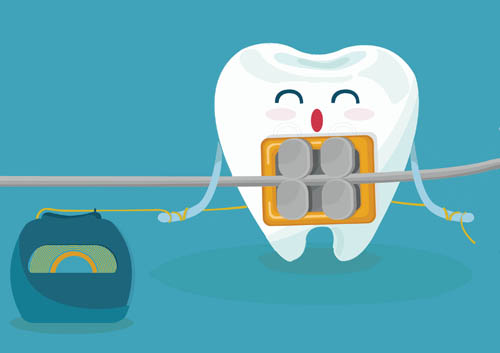
- Don’t Forget to Floss. Flossing with braces might seem tricky, but it is a necessity. Ask Dr. Brent Nickolaychuk to show you the best way to floss effectively with braces.
- Mouthwash Use. Use the mouthwash recommended by Dr. Brent Nickolaychuk. For the best results, swish the mouthwash around in your mouth for 30 seconds.
- Get Regular Cleanings. Regular dental exams and cleanings are more important when you have braces. Cavities can delay your treatment progress, so be sure to visit your dentist every six months.
Practice Good Hygiene Daily
Good oral hygiene practices are important every day, whether you wear braces or not. But they become even more important during the months you wear braces. In addition to your regular orthodontic checkups, see your general dentist for cleanings and exams.
Together, you and our Winnipeg or Selkirk, MB team will keep your mouth healthy and fresh during and after your orthodontic treatment.
February 26th, 2015

Teeth erupt crookedly for a number of reasons that range from genetics to mouth deformities and serious oral diseases. When extra teeth or abnormally large teeth create a malocclusion (crookedness or misplacement of teeth), the culprit is usually genetic in nature. Other inherited traits involve jaws that are too small to accommodate a full set of teeth and misaligned jaws that did not form properly in the womb.
Can crooked teeth be prevented?
In most cases, underbites, overbites, and crooked teeth are genetically derived and can’t be avoided. Orthodontic treatment with braces will be necessary to correct the condition once the child is old enough to wear them. However, certain early childhood behaviors may also contribute to the development of crooked teeth that can be avoided. These include:
- Thumb sucking and tongue thrusting
- Losing baby teeth to decay before permanent teeth have naturally pushed them out of their sockets
- Allowing pacifier use to continue after front teeth have erupted
Permanent teeth underneath baby teeth are directly affected by the health of baby teeth. If baby teeth are prematurely lost due to decay or trauma, permanent teeth will shift when they start moving upward. Baby teeth are like anchors for permanent teeth that help guide them as they erupt through the gums.
In addition, excellent care of baby teeth is vital to having healthy permanent teeth free of discoloration or decay. Harmful oral bacteria can spread into the gums and reach permanent teeth still buried in the gums. Once attached to a tooth’s enamel, bacteria will begin eroding the tooth even before it has a chance to take its first bite!
When to Start Orthodontic Treatment for Crooked Teeth
Dr. Brent Nickolaychuk and our staff suggest that parents bring your child to Kildonan Orthodontics around age seven to rule out potential issues with permanent teeth eruption. If problems are discovered, it is not unusual to begin orthodontic treatment at that age. In fact, specific conditions such as crowding and gaps between teeth are easier to correct at an early age.
Early treatment also benefits from the growth process of the jaw, which helps move teeth to normal positions.