Certified Specialists
in Orthodontics
3 Locations to Serve You —
Kildonan/Transcona, Southdale, & Selkirk, MB!
Request a Consultation Free Consults No referral needed

Our Blog

Damon® Smile: What You Should Know

May 14th, 2015

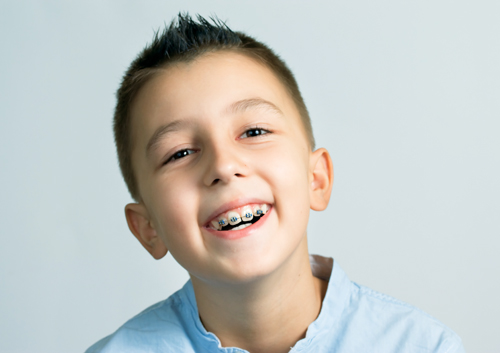
Contrary to popular belief, not all braces are created equal. More importantly, not all braces look like the hulking headgear found in 1980s teen movies. If you’re embarking on an orthodontic journey, that should give you a sigh of relief. Orthodontic technology has come a long way over the years. As a result, Damon Smile braces offer a world without elastic ties. Imagine that! Here are three things that make Damon Smile braces different from conventional braces.

More Comfort and Fewer Adjustments

Damon Smile braces use light, “shape memory” titanium wires. Low-friction force guides the teeth into place, creating less discomfort for you than conventional braces. Instead of elastics, Damon Smile braces use a specialized slide that helps the archwire guide the teeth into place. The teeth move freely, quickly, and comfortably. Without traditional ties and elastics, Damon Smile braces require no tightening and fewer adjustments.

Less Treatment Time

For the most part, conventional braces are worn anywhere from 18 months to two years. However, due to its unique, elastics-free technology, treatment with Damon Smile braces is often considerably faster. If you’re starting on an orthodontic journey, then chances are that's the type of thing you want to hear. While the amount of time a person wears braces varies from case to case, Damon braces typically get the job done faster than conventional braces.

Fewer Orthodontic Appointments

Coming to our Winnipeg or Selkirk, MB office is probably not on the top of your list of things do, though we do love seeing you! However, Damon braces offer a convenient and hassle-free orthodontic experience. Why? The self-ligating braces require no tightening and fewer adjustments, which in turn means you're going to have far fewer visits with Dr. Brent Nickolaychuk during your treatment. Chances are, that's the sort of thing that's going to put a smile on your face.

What is malocclusion?

May 7th, 2015

The term malocclusion refers to misalignment of teeth. You may have been born with malocclusion, so your teeth simply grew in crooked, or the misalignment and crowding of your teeth occurred over a period of time. Either way, not only can malocclusion pose cosmetic issues, but it can have a negative effect on your speaking and eating abilities as well.

Types of Malocclusion

Malocclusion encompasses multiple types and classifications of misalignment issues, including twisting or rotation of the teeth and molars that do not meet when you bite down. In some cases, the top front teeth are pushed outward in an upper protrusion.

In other cases, a misplaced midline results when the front top teeth don’t meet with the front bottom teeth. Transposition occurs when teeth protrude through the gums in a position where another tooth is supposed to be.

Practically any type of crowding or spacing issues, rotation or twisting of the teeth, or bite problem – including overbite, underbite, open bite, or crossbite – is included under the umbrella of malocclusion.

Malocclusion Classifications

There are three classifications of bite or misalignment problem.

  • Class 1 malocclusion: While the bite may be normal, the upper teeth overlap the lower teeth slightly. This is the most common type.
  • Class 2 malocclusion: Known as overbite or retrognathism, class 2 involves a severe overlap of the upper teeth and jaw over the bottom teeth and jaw.
  • Class 3 malocclusion: Known as underbite or prognathism, class 3 occurs when the lower teeth and jaw overlap the upper teeth and jaw. Thus, the lower jaw juts forward.

Causes of Malocclusion

The most common cause of malocclusion is genetics. However, there may be other causes, including the development of abnormally-shaped teeth, lost teeth, or impacted teeth; thumb sucking or overuse of a pacifier as a small child; having fillings or crowns that do not fit correctly; a serious injury that causes misalignment of the jaw; or developing a tumor of the mouth or jaw.

Treating Malocclusion

Orthodontic care at Kildonan Orthodontics with Dr. Brent Nickolaychuk is the main treatment available for malocclusion, which includes getting braces, Invisalign, or other corrective treatments. Treatment is ideal not just to have your smile improved, but because it makes the teeth easier to clean and maintain, lowers the risk of gum disease and tooth decay, and can even take pressure off the jaw and teeth.

Think about orthodontic treatment if you (or your child) display any signs of malocclusion. Early treatment of malocclusion during childhood can lessen expensive treatment later on.

What is a water pick and do I need one?

April 30th, 2015

Water picks, sometimes called “oral irrigators,” make an excellent addition to your regular home care regimen of brushing and flossing. Especially helpful to those who suffer from periodontal disease and those patients of ours undergoing orthodontic treatment with full-bracketed braces, water picks use powerful tiny bursts of water to dislodge food scraps, bacteria, and other debris nestled in the crevices of your mouth. Children undergoing orthodontic treatment may find using a water pick is beneficial if their toothbrush bristles tend to get caught on their wires or brackets.

When you use a water pick, you’re not only dislodging any particles or debris and bacteria you might have missed when brushing, you are also gently massaging the gums, which helps promote blood flow in the gums and keeps them healthy. While water picks are an excellent addition to your daily fight against gingivitis and other periodontal diseases, they are incapable of fully removing plaque, which is why Dr. Brent Nickolaychuk and our team at Kildonan Orthodontics want to remind you to keep brushing and flossing every day.

If you have sensitive teeth or gums and find it uncomfortable to floss daily, water picks are a good alternative to reduce discomfort while effectively cleaning between teeth. Diabetics sometimes prefer water picks to flossing because they don't cause bleeding of the gums, which can be a problem with floss. If you have a permanent bridge, crowns, or other dental restoration, you may find that a water pick helps you keep the area around the restorations clean.

So how do you choose the right water pick?

Water picks are available for home or portable use. The home versions tend to be larger and use standard electrical outlets, while portable models use batteries. Aside from the size difference, they work in the same manner, both using pulsating water streams. A more crucial difference between water picks is the ability to adjust the pressure. Most home models will let you choose from several pressure settings, depending on how sensitive your teeth and gums are. Most portable models have only one pressure setting. If you want to use mouthwash or a dental rinse in your water pick, check the label first; some models suggest using water only.

Please give us a call at our Winnipeg or Selkirk, MB office if you have any questions about water picks, or ask Dr. Brent Nickolaychuk during your next visit!

Not-So-Sweet Sweets: The five worst candies to eat during orthodontic treatment

April 23rd, 2015

Sticky, hard, and gooey: these candies fill your dopamine receptors with spasms of sugar-filled joy, but if you’re undergoing orthodontic treatment at Kildonan Orthodontics to straighten your teeth, then these sweets are not so sweet. While you may have a Willy-Wonka-sized sweet tooth, there are some candies you’re going to have to avoid while wearing braces.

Here are five bracket- and wire-destroying culprits that Dr. Brent Nickolaychuk and our team recommend leaving on the candy aisle and not put in your mouth, no matter how tempting they may be.

  1. Gum is sticky and stringy. It can get tangled like fishing net in your braces. You don’t want to be that boy or girl trying to pull knots of Wrigley’s out of your braces without being seen.
  2. All chewy, gooey candies need to be avoided. When you’re wearing braces, don’t even think about putting a caramel candy in your mouth. Caramel will not only stick to your braces, making it look as if you haven’t brushed your teeth in a week, but the gooey texture can pull apart the wires, and trigger an emergency visit to Kildonan Orthodontics.
  3. Hard candy may seem like a safe choice, but it’s not. What’s the problem? Nobody ever just sucks on hard candy; sooner or later, we bite down on it. Biting a hard candy may cause part of your braces to snap. Furthermore, once the candy is broken into a bunch of little pieces, it’s not uncommon for one of those sugary shards to get wedged between your braces and teeth … and that’s a cavity waiting to happen.
  4. The taffy you enjoy getting at a seaside boardwalk is going to have to go on the back burner. Like caramel, taffy can pull apart and damage your braces. You don’t want to have your expensive orthodontic gear replaced.
  5. Please, just one lollipop? Nope. A lollipop is nothing more than hard candy on a stick. If you can’t have hard candy during orthodontic treatment, then you shouldn't have hard candy on a stick either.

Have any more questions about what you can and can’t eat when you have braces? Please give us a call at our convenient Winnipeg or Selkirk, MB office to learn more, or ask Dr. Brent Nickolaychuk during your next adjustment visit!

No Referral Needed!